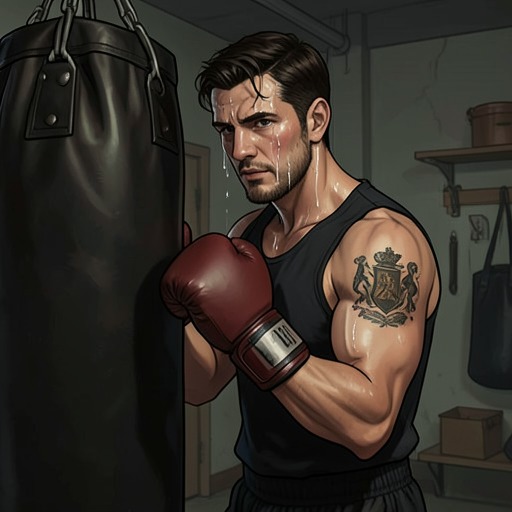
End of Professional Boxing Career Incident of Makoto Hara
A ManMakoto Hara’s career-ending boxing accident is the decisive break in a story of talent and thwarted possibility: after his professional debut, an “accident” brought his boxing dream to an end. The incident is later recalled as part of Hara’s larger history, and its ambiguity shadows Kido’s understanding of both Hara and himself.
Background and the Lost Dream
Kido recounts Hara’s life to Kaori as a sequence of hardship and attempted beginnings. After describing Hara’s father, Kenkichi Kobayashi, and the murders he committed, Kido tells of Hara’s bullying, his mother’s abandonment of him, and his time in an orphanage. Hara then found a direction in a boxing club, where he pursued a dream that seemed to offer a way forward from his childhood.
The accident came after Hara’s professional debut and ended that career. Kido later says Hara had genuine boxing ability and won the East Japan Rookie King Tournament. That achievement sharpens the significance of the interruption: Hara was not merely drawn to boxing but had demonstrated considerable promise before the path he had chosen was cut short.
The Accident in Kido’s Account
When Kido tells Kaori Hara’s story, he moves from Hara’s childhood through the boxing club to the collapse of his dream after the debut. Kaori initially listens skeptically, appearing more interested in Kido’s fervor than in the story itself. Her response changes when he reaches Hara’s family-register exchange: she asks whether such a thing can really happen. Kido then describes Hara’s later life, including his marriage to a woman who had lost a child, their family and brief happiness, and his death in a logging accident.
Kaori’s direct question about what the story has to do with Kido makes the account more than detached biography. The boxing accident is one part of a life Kido tells with unusual enthusiasm, but the personal significance of that identification is not something he can readily explain. The story’s accumulated reversals—an abandoned child finding a vocation, a promising boxer losing it, and a new identity and family followed by another death—give Kido’s narration its tragic shape.
Later Knowledge and Retrospective Meaning
Hara’s boxing history also emerges through the account of Daisuké Taniguchi, who recalls meeting Hara when he was using the name Yoshihiko Sonézaki. Daisuké says Hara told him that he had been a boxer and had made two suicide attempts. Kido recognizes that Hara had apparently come to admit that his earlier fall from an apartment was a suicide attempt, but the disclosure of a second attempt surprises him; he had not known there had been two.
The two events should not be conflated. The career-ending accident followed Hara’s professional debut, while the apartment fall is later understood as a suicide attempt. Daisuké’s account adds that Hara worked in restaurants and other places after leaving boxing, then found it increasingly difficult to get work as information about him spread online, before taking temporary jobs. The loss of boxing thus belongs to a longer history in which a broken vocation is followed by efforts to make a living under increasingly difficult circumstances.
Significance in the Narrative
The accident returns through recollection rather than through a detailed account of what happened at the debut. Its importance lies in the before-and-after it establishes: Hara had a real talent, achieved recognition by winning the East Japan Rookie King Tournament, and then lost the career around which he had built his hopes. The narrative does not specify the accident’s physical circumstances, so its force rests on the consequence Kido emphasizes—the end of Hara’s dream.
For Kido, recalling that rupture makes a later exchange with Kaori newly unsettling. When she fears he might do something similar, he is taken aback and denies that he could, pointing to Sota. Kido’s surprise is tied explicitly to his memory of Hara’s boxing career ending in an “accident”; Kaori’s pale, watchful response leaves him wondering whether she has considered such a crisis before. The episode therefore connects the history Kido has been telling to the strain in his marriage, without establishing that Hara’s accident was intentional.
The story’s repeated retellings also change what can be known about Hara. Kido first presents the accident as the point at which his boxing ambition collapsed; later testimony from Daisuké reveals that Hara spoke of two suicide attempts, making Kido reconsider the meaning of the apartment fall but not supplying a new explanation for the boxing accident. The distinction preserves an important uncertainty: Hara’s career-ending event is remembered through its devastating outcome, while the later disclosure revises a different episode in his life.